
My first published piece of fiction was a huge mistake and almost ruined my writing career before it started. Nevertheless, it was a valuable lesson that took me years to understand and internalize in a way that made me a better person. Also, I’m still bitter in the pettiest way possible.
That first written piece was a poem I wrote in English class my senior year. The teacher was odd but no one complained because, as long as we showed up and went through the motions of doing the work, she gave all of us As.
Rather than “English,” she was actually teaching us was that she didn’t care about our education but if we didn’t care that she didn’t care, we could both get what we wanted, which was a judgment- and pressure-free hour during the day. Now that was a life lesson I rapidly internalized.
One of the pseudo-assignments was to write a poem and a short story. I had recently, and secretly, grown excited about short stories, and so I threw myself into the fiction portion of the assignment, writing what I considered to be a decent story. Literally, one of my first, so it was certainly not very good, but I didn’t know that.
I low-key loved that story and wanted to see it in print. Being my first time, I didn’t know what I didn’t know about what makes a good story.
Writing fiction and having sex are similar in that you think about it a lot before you ever try it. You fantasize, and maybe fetishize, the thing you want to do. When at last it happens, you really have no idea what’s going on, or what goes where, or if you’re doing it correctly, and when you’re done you don’t really know what to do with what just happened.
(I’ve since learned that, with both writing and sex, it’s best to rinse and repeat until satisfied.)
It’s a truth universally acknowledged that you can learn to do something by watching others do it. With cooking and pickleball, for instance, no one will argue that you can’t learn before you begin by watching others. But it’s pretty rare to watch people write fiction, or watch people have sex before you try those.
Having shot my wad writing that short story for the English class assignment, I dashed off a half-assed poem about shoes to complete the assignment.
The English teacher, Mrs. Joy, recommended my story/poem combination for the school newspaper. I told her never mind about the poem; the story is the thing. I even imagined a multi-page spread in our school paper to accommodate my awesome short story.
However, the editors of The Hurricane’s Eye only ever published student poems (or very, very, very short stories), so that meant my poem—not my story—would be published. The poem about shoes. The half-assed poem about shoes I wrote while watching an episode of Gilligan’s Island, fantasizing about Mary Anne and coconut cream pies. (Where did she get all the cream for those pies? Did the Howell’s somehow bring an eight-year supply of fine food stuffs, or was something giving milk on that island?)
Dear readers of the Picayune, I give you that poem:
The Shoe
Some people think that I am a shoe.
This is a lie; none of it is true.
I tried to dispute it but my laces threw a fit.
I yelled and yelled with the hope that my tongue’ll
Be able to redeem me, but this world’s a real jungle.
So I gave up trying, and went for a stroll,
But the real reason for my walk was to try out my
new rubber sole.
—The Hurricane’s Eye, Volume XIV, Number Five, March 19, 1982
Tongue’ll? I’ve claimed poetic license many times in the past, but I should have been expelled for that one. I got a few snide remarks from classmates, and I deserved it, except that they should have published the story!
The lesson, of course, is that once you submit work into the world, it’s out of your control. People will either love it, hate it, or be entirely indifferent. You just have to accept it and move on.
Another lesson is to always deliver the best product possible. Did Mary Anne ever serve a coconut cream pie that was anything less than amazing? Hell no. That wholesome, cute, girl-next-door always whipped up an amazing pie and did it on a tropical island with no dairy, no kitchen tools, and no kitchen.
The real tragedy of Gilligan’s Island, and the misogyny of that era, is that Mary Anne, Ginger, and Lovey fulfill traditional roles demanded by the patriarchy: cute girl next door, glamorous bombshell, and haughty kept-wife, respectively.
After one taste of Mary Anne’s pie, the men should have made her chief engineer of the boat-repair team. She would have worked hard and used all of her ingenuity to learn how to repair the boat, and the castaways would have been sailing home by the end of the week.
That’s what it means to make sure you always deliver the best product possible.
Take my current novel for example. I finished a draft last September and shared it with my friend and first reader. She got through it but she was disappointed. The main character was loathsome, the violence surrounding that character too repugnant to allow redemption in the story. I could have reacted to that feedback with, “What the hell does she know about writing a novel?”
Luckily, I realized she knows a lot about reading a novel, and the truth in her reaction was absolute gold for me. In fact, one suggestion she made helped me with the rewrite.
I sent the next version to two more readers, and the reactions were much, much better. Even still, there was feedback. That feedback has allowed me to make even greater improvements in this next revision.
I don’t know that this novel will be as tasty and satisfying as Mary Anne’s pie, but I sure hope you’ll take a big bite of it when it’s served.

Meanwhile, at My Writing Desk…
As I mentioned, I’m mostly rewriting the current novel, a business thriller with a young woman caught between a sexual predator and her own mistakes that won’t allow her to escape.
Maybe You’d Like
This week I’ve joined with authors for a group promotion of FREE Sci-fi, Fantasy, & Paranormal stories:
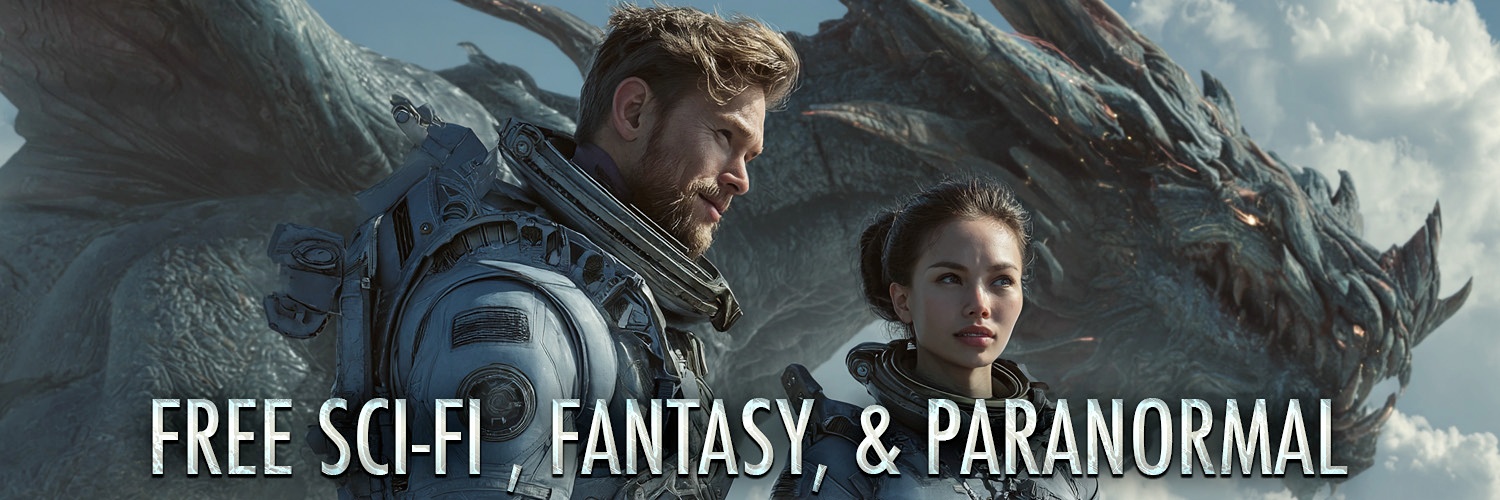
https://storyoriginapp.com/to/QTwHXac
Recommended Reading
I just finished re-reading A Clockwork Orange. This is one of the rare cases where I saw the movie before I read the book, and I still prefer the movie. That said, it’s a great book, especially once you realize you don’t have to try to figure out what the made-up words mean. Skim over them and let the story emerge from whatever is left. Warning: it’s a story full of ultra-violence and the old in-out, in-out. Not for my younger droogies.
Next Picayune
I think I’ll be coming at you in just one week again, for the third straight quick turnaround, to promote another giveaway. Thanks for reading the Mickey Picayune!
All the best,
Mickey
P.S. For those of you who picked up a copy of Ashley Undone recently, nothing helps like reviewing the book. It can be anywhere you’re comfortable reviewing books, and here’s a link to the Amazon page where you can do that if you don’t know anything better. (Thanks in advance.)